The James Family
Notes by
John Barnard
Updated 13 June 2026
The Jameses were my maternal grandfather's family. They were of Cornish origin, and for several generations in the 17th and 18th centuries they leased a property called "Trevabyn" in the hamlet of Goldsithney, part of the parish of St Hilary, a few miles east of Penzance. Their landlords were the St Aubyn family, the local landed gentry, who remain the owners of nearly St Michael's Mount to this day.
The James genealogy is complicated, with many marriages between a small number of local families (including Trevenen, Coulson, Leah, Jenkin and Gundry), though there are actually rather few marriages between blood relations. In one instance, out of four James sisters, two married two out of four Gundry brothers, the other two sisters married two Trevenen cousins, and their respective daughters married the other two Gundry brothers. One of the Trevenen cousins had one sister who married a cousin of the four James sisters (my great-great-great grandparents), while another of his sisters married their aunt's son (the only one of these marriages that actually involved people with an immediate common ancestor), whose brother was married the aunt of the four James sisters!
Evidence from the various leases of Trevabyn, some of which are held at the Cornish Record Office, suggest the property swapped between different inter-marrying branches of the James, presumably on the basis of who was best positioned to run it.
Family Trees
The James and Trevenen Families (17th-19th centuries) [Printable PDF - A1 size]

This tree attempts to show the relationships between the different branches of the James family of Trevabyn, and the Trevenen, Gundry and Jenkin families.
The James, Coulson and Leah Families (19th-20th centuries) [Printable PDF]

This tree includes the more recent Jameses, after they had left Trevabyn, and shows their complex and multiple connections with the Coulson and Leah families. There are a lot of Coulsons still to be added, including the descendants of Thomas Coulson (1767-1845), Master Painter of Plymouth Dockyard.
Descendants of Henry
Rosher James (1862-1931) [Printable PDF]

Descendants
of Lionel James (1868-1948) [Printable
PDF]

These two trees bring the family up to date, and I am indebted to my cousins who are shown on them for providing me with the relevant data.
Most of the people shown on the above two trees are still living and so for reasons of personal privacy and to avoid the danger of identity theft, access to them is restricted to family members. A username and password are required to see them, and can be obtained by sending an e-mail to me (see contact details). Please also keep me informed of any additions or corrections needed.
There has been a tendency for male members of the James family either to have no children, or to have only daughters. As a consequence, with the death of my uncle Robert Clabburn Trevenen James in December 2008, our branch of the James family is now extinct in the male line: there are no living descendants of my great-great-grandfather Trevenen James (1794-1867) who have the surname James. It is possible that his brothers (in particular Nicholas, who died in Australia in 1858) may have living descendants who retain the James surname, and in our branch James continues to be used (if sparingly) as a given name.
The following notes give a few more details on some members of the James family, and I hope to expand these into fuller biographies, and add more photographs and scans of original documents, in due time.
Trevenen James (1794-1867)
Trevenen James was the son of Francis James (b. 1757) of Trevabyn and his wife Anne Trevenen (b. 1758). He seems to have been the first member of the family to have broken away from yeoman farming (though it is likely that earlier generations were also involved in tin mining at Trevabyn) and by his early twenties he was Manager of the Penzance Union Bank. This was re-formed as Henry Boase, Sons & Co. in 1823, by which stage he was a partner, and in 1826, he married Catherine Coulson, daughter of a local painter. He ran into some financial difficulty in 1831, and was forced to sell his partnership in the Bank, but he evidently recovered his position over the following years, and by the mid 1840s was established in Tavistock Square in London. By this point he was sufficiently affluent to wish to establish his credentials as a Victorian Gentleman, and applied to the College of Heralds for a Grant of Arms, which he duly obtained.
He and Catherine had a large family, and some remarkable memoirs of his youngest son, Augustus Frederick James (1842-1912, also known as "Nunks", and "Uncle Dick") give a picture of their childhood in both London and Cornwall.
His Christian name of Trevenen (his mother's maiden name) has been perpetuated very strongly among his descendants, possibly because of its strong Cornish resonance. It is not unknown as a given name in other families, most prominently the Huxleys, who have descent from a Cornish Treveven family (via the wife of Thomas Arnold, the famous Rugby Headmaster), though I have not yet been able to establish a connection with my own ancestors. Trevenen James's eldest son, who died unmarried, was also named Trevenen, and the short-lived son of his youngest son had it as a middle name. Six out of his nine great-grandchildren had it, as do two of his great2-grandchildren and eight of his great3-grandchildren. Its popularity is interesting, given that the surnames of other families that married into the James's, such as Coulson and Rosher, have disappeared from subsequent generations.
George Coulson James (1828-1875)
 George
was the second son of Trevenen and Catherine James, and
he
was a London solicitor, who wrote a book on Company Law. He married
Susannah Elizabeth Rosher
(c. 1830-1902), who came from a family
of
successful businessmen in Kent. He died at the early age of
47, leaving his wife with four children
aged between 7 and 15. Whether it was the effect of their
father's early death, or the influence of a formidable mother, or
simply the advantages of affluence, all four had remarkable
careers and left significant writings behind them:
George
was the second son of Trevenen and Catherine James, and
he
was a London solicitor, who wrote a book on Company Law. He married
Susannah Elizabeth Rosher
(c. 1830-1902), who came from a family
of
successful businessmen in Kent. He died at the early age of
47, leaving his wife with four children
aged between 7 and 15. Whether it was the effect of their
father's early death, or the influence of a formidable mother, or
simply the advantages of affluence, all four had remarkable
careers and left significant writings behind them:

Edith Emily Coulson James (1860-1936)
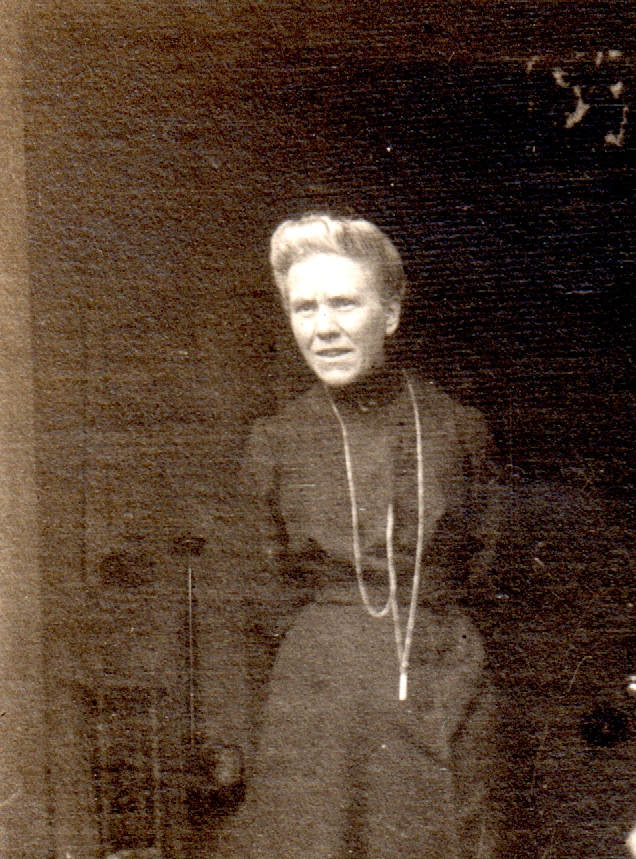
 Edie,
as she was known in
the family, was the eldest of the four, and the only girl. Following
her father's death, when she was only 15, she was left to be a
companion to her mother, while her younger brothers went off to
boarding school at Westminster, and then to careers at Oxford
University and beyond, or in the Army. Such was often the fate of
daughters in late Victorian England, and Edie never married.
Fortunately her mother was well-off, and they travelled together on the
continent, and especially in Italy. Edie was highly intelligent and
probably found solace in the art galleries and libraries of the great
northern Italian cities - in particular Bologna - and became an
historian of renaissance Italian
art, establishing good relations with the scholarly community in
Bologna. Following her mother's death in 1902, she threw herself into
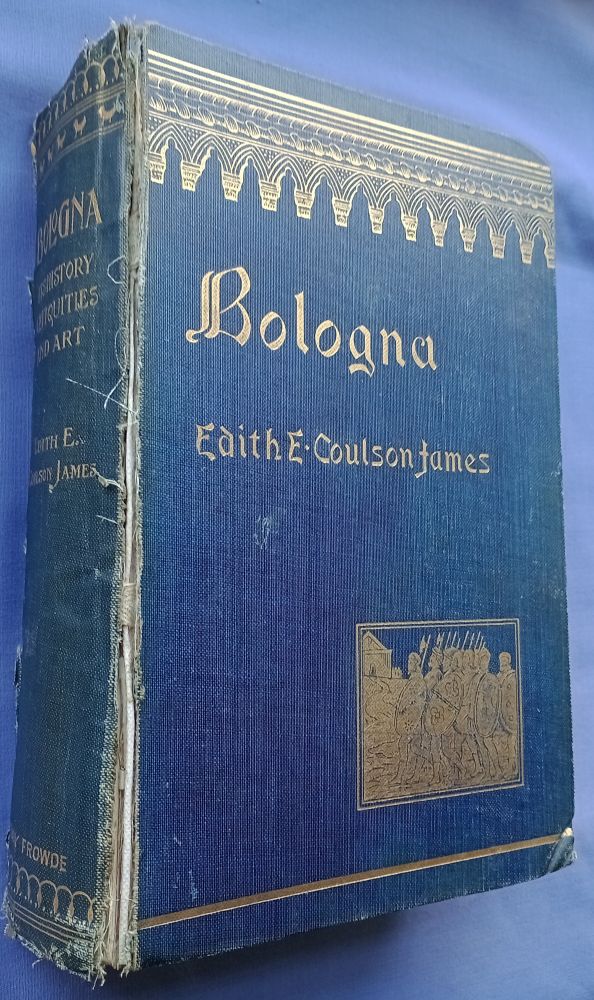
research, and in 1909 published her
magnum opus, a 400-page book
on the history, antiquities and art of Bologna [EECJ/11], copiously
illustrated with her own photographs, along with a number of scholarly
articles and letters.
Edie,
as she was known in
the family, was the eldest of the four, and the only girl. Following
her father's death, when she was only 15, she was left to be a
companion to her mother, while her younger brothers went off to
boarding school at Westminster, and then to careers at Oxford
University and beyond, or in the Army. Such was often the fate of
daughters in late Victorian England, and Edie never married.
Fortunately her mother was well-off, and they travelled together on the
continent, and especially in Italy. Edie was highly intelligent and
probably found solace in the art galleries and libraries of the great
northern Italian cities - in particular Bologna - and became an
historian of renaissance Italian
art, establishing good relations with the scholarly community in
Bologna. Following her mother's death in 1902, she threw herself into
research, and in 1909 published her
magnum opus, a 400-page book
on the history, antiquities and art of Bologna [EECJ/11], copiously
illustrated with her own photographs, along with a number of scholarly
articles and letters.
She was not afraid to enter into dispute
with established art critics, and in her research she was more
interested in painstakingly uncovering historical evidence to determine
the authenticity of a painting, rather than relying on "the general
impression formed by those skilled and experienced in judging old
paintings" [EECJ/17]. Her particular interest was the 15th century
Bolognese painter Francesco Raibolini (Francia),
and she devoted several years in trying to authenticate what she
believed to be a self-portrait. Though she assembled and
published a considerable amount of evidence, the portrait (now at the Museo Nacional Thyssen-Bornemisza
in Madrid) remains attributed to Francia's older contemporary from
Ferrara, Francesco del Cossa, and is described as "portrait of a man
with a ring".
Her efforts, and the way they were disregarded by the male-dominated
art
establishment, have been discussed in detail in a recent article in the
Burlington Magazine [EECJ/13].
That article is just one of a number of
publications discussing Edie's work, as historiographers have taken a
renewed interest in the role of 19th
and early 20th century women art historians [EECJ/15, EECJ/10]. A 1998 Italian book on Francia and his School [EECJ/16] acknowledged
her important discoveries "inexplicably ignored in a historiography
misogynistic to the point of obtuseness", and she is also the subject
of a recent article on a Bolognese website [EECJ/14]. The Bologna-based
British detective novelist Tom Benjamin has told me that he continues to find her book useful for background research for his novels set in the city.
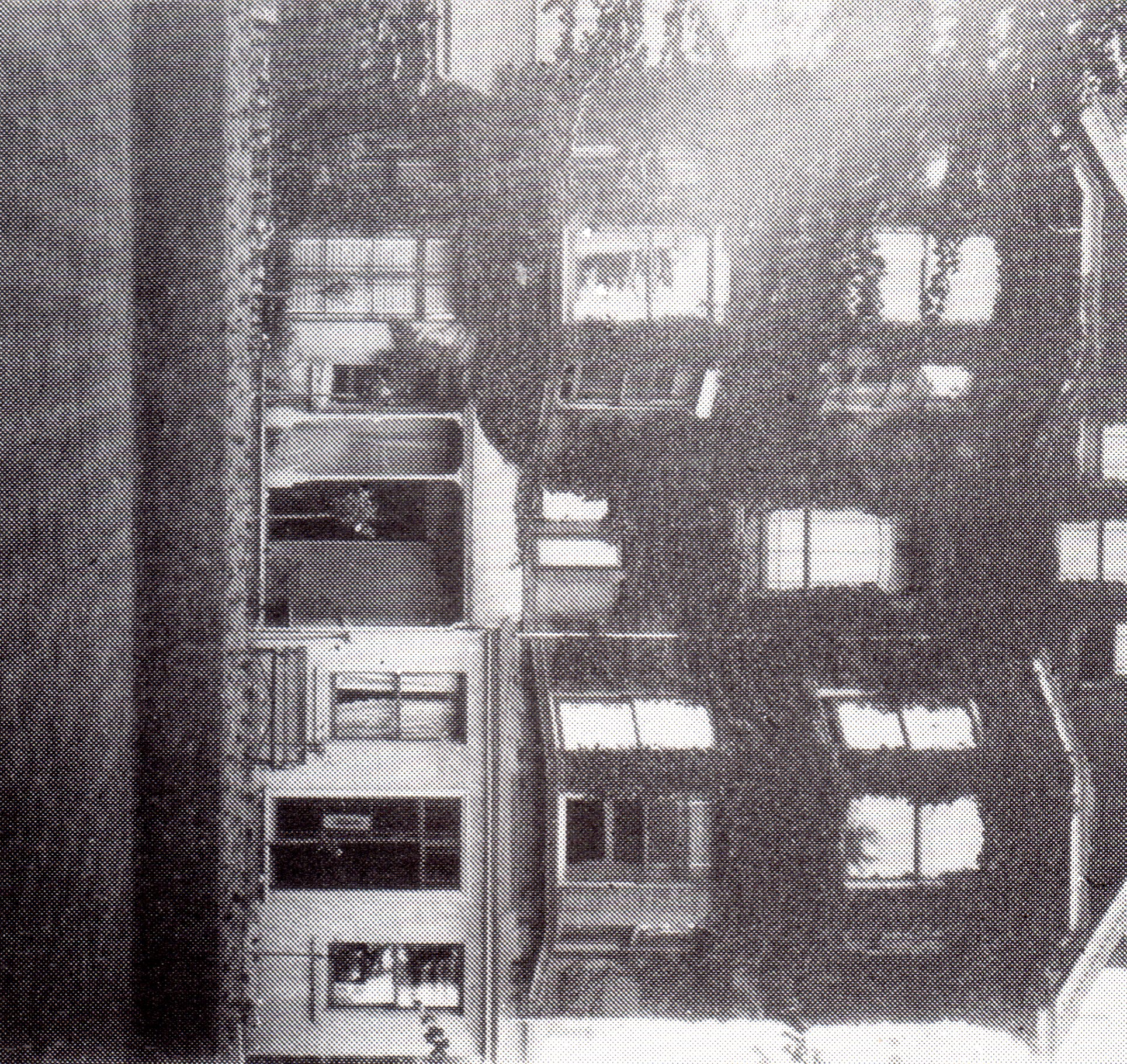 When not abroad, Edie lived in a large
house in Tunbridge Wells (right). She was a member of the (still extant)
intellectual women's club, the Lyceum, which gave her a base in London,
and she served for a while on its council. Her nephew Harold Hindle
James remembered her "courage, integrity, and strict regard for
tradition", which gave her outlook "a certain degree of severe
rigidity, and yet great fineness and dignity also" [HHJ/35-5, p. 55].
Harold's sister Mollie described her as "a highly intelligent woman,
although somewhat eccentic, and very much ahead of her times", adding
"Can you picture this little lady (she was about five foot or
under) carrying all the equipment then necessary for photography - the
tripod and plates and black cloth - and setting it up and fussing
round" [JAM/27, p. 17].
Her regard for tradition did not prevent her being a campaigner for
women's suffrage, and she persuaded her brother Lionel to allow her to
hold meetings in a room at Monmouth School, where he was Headmaster,
though she was very much on the non-violent "suffragist" side of the campaign, rather than a militant suffragette. Her surviving correspondence also shows
her active in lobbying politicians and civil servants on behalf of her
brother Henry, when he was passed over for appointment as Director of
Public education in Bengal in 1913 [EECJ/4, EECJ/5], and when he was forced to resign as Principal of Presidency College in Calcutta in 1916 [EECJ/6].
When not abroad, Edie lived in a large
house in Tunbridge Wells (right). She was a member of the (still extant)
intellectual women's club, the Lyceum, which gave her a base in London,
and she served for a while on its council. Her nephew Harold Hindle
James remembered her "courage, integrity, and strict regard for
tradition", which gave her outlook "a certain degree of severe
rigidity, and yet great fineness and dignity also" [HHJ/35-5, p. 55].
Harold's sister Mollie described her as "a highly intelligent woman,
although somewhat eccentic, and very much ahead of her times", adding
"Can you picture this little lady (she was about five foot or
under) carrying all the equipment then necessary for photography - the
tripod and plates and black cloth - and setting it up and fussing
round" [JAM/27, p. 17].
Her regard for tradition did not prevent her being a campaigner for
women's suffrage, and she persuaded her brother Lionel to allow her to
hold meetings in a room at Monmouth School, where he was Headmaster,
though she was very much on the non-violent "suffragist" side of the campaign, rather than a militant suffragette. Her surviving correspondence also shows
her active in lobbying politicians and civil servants on behalf of her
brother Henry, when he was passed over for appointment as Director of
Public education in Bengal in 1913 [EECJ/4, EECJ/5], and when he was forced to resign as Principal of Presidency College in Calcutta in 1916 [EECJ/6].
In modern and less misogynistic times
Edie would probably have distinguished herself at least as much as her
brothers did at University and gone on to a career as a respected
academic art historian or gallery curator, and one can only imagine the
frustrations she must have felt from the limitations imposed on her by
the conventions of her society, however much mitigated by her relative affluence. In her 70s she developed stomach
cancer, and her nephew Harold noted that she displayed the same courage
in awareness of her fate that she had shown at any other time of test
[HHJ/35-5, p. 55]. She died at her home on 2nd June 1936, the exact
fifth anniversary of her brother Henry's death from the same disease. An obituary in The Times the following day [EECJ/7]
noted that she had hoped to be able to compile a full account of
Francia's work and influence, but failing health had prevented its
realisation. It is fitting that, nearly a century later, her seminal
work is receiving the recognition it deserves.
Henry Rosher James (1862-1931)
 Known to
the family as
"Bobby", for reasons I have not yet ascertained, he
was educated at Westminster School (where he was School Captain) and at
Christ Church Oxford. He spent much of his career in the
Indian
Education Service, and was Principal of Presidency College in Calcutta,
now one of the most prestigious educational institutes in India. He was
a prolific writer, and not only published "Education and Statesmanship
in India 1797-1910"
(Longmans Green & Co., 1917) in which he argued strongly in
favour
of the education of the native Indian people, but also a translation of
the 6th century Roman author Boethius's "Consolations of Philosophy".
After his retirement from India, he wrote Our Hellenic Heritage
(Macmillan, Vol I (Part I, The Great Epics and
Part II, The Struggle
with Persia), 1921; Vol II (Part III, Athens - her Splendour and her
Fall (1922) and Part
IV The Abiding Splendour
(1924)), a book about the history and legends of Ancient
Greece, and his final work, published after his death, was a biography
of the early feminist writer Mary Wollstonecraft (OUP, 1931) in
which he makes no secret of his own sympathy for her demands for "A
Vindication of the Rights of Woman".
Known to
the family as
"Bobby", for reasons I have not yet ascertained, he
was educated at Westminster School (where he was School Captain) and at
Christ Church Oxford. He spent much of his career in the
Indian
Education Service, and was Principal of Presidency College in Calcutta,
now one of the most prestigious educational institutes in India. He was
a prolific writer, and not only published "Education and Statesmanship
in India 1797-1910"
(Longmans Green & Co., 1917) in which he argued strongly in
favour
of the education of the native Indian people, but also a translation of
the 6th century Roman author Boethius's "Consolations of Philosophy".
After his retirement from India, he wrote Our Hellenic Heritage
(Macmillan, Vol I (Part I, The Great Epics and
Part II, The Struggle
with Persia), 1921; Vol II (Part III, Athens - her Splendour and her
Fall (1922) and Part
IV The Abiding Splendour
(1924)), a book about the history and legends of Ancient
Greece, and his final work, published after his death, was a biography
of the early feminist writer Mary Wollstonecraft (OUP, 1931) in
which he makes no secret of his own sympathy for her demands for "A
Vindication of the Rights of Woman".
Henry Rosher James married Mary Hindle in 1890, and they had three children. The eldest, Harold Hindle James (1894-1969, known as Huck) served in the Royal Flying Corps in World War I, and subsequently with RAF Intelligence in Iraq. He spent much of the rest of his life in Egypt, where he was a personal friend of King Farouk's, remained there throughout the 1956 Suez Crisis, and attracted some press attention in 1967 when he was mistreated and abruptly expelled as a "British spy" (he was then aged 73!) during the Six Day War.
Henry and Mary's daughter, Mary Hindle James (1899-1996, known as Mollie) was a physiotherapist, and in 1927 married an Australian businessman and later farmer, Donald 'Mac' Mackinnon (1892-1965). They spent many years before and during World War II living in the Argentine, where Mac worked for Vestey Foods, before moving to Australia in 1946 to take over the Mackinnon family farm, Marida Yallock, in the Western District of Victoria. In the 1950s he became more involved in Liberal Party politics, and was invited by the External Affairs Minister Richard Casey (later Lord Casey) to serve as Australian Ambassador to Brazil 1957-1960. Mollie wrote her own memoirs (For All That Time Has Held, privately published 1993, ISBN 0 646 14825 7), and her many descendants live in Australia.
Their younger son, Eric Trevenen James (1904-1989), who was known as "Bob" to his immediate blood family, but as "Jimmy" to most others, and as "Eric" only to his cousins, followed his father to Christ Church Oxford, where he read History. His career was spent in the colonial service, in Uganda, where he was a District Commissioner. He married Gulielma ("Gelma") Fox (1914-2002), who had a son by a previous marriage, but he had no children of his own.
Bertram Alfred James (1866 - 1891)
 "Bertie"
followed his elder brother to Westminster, where he
was a Queen's Scholar. He was commissioned as a Lieutenant in
the Royal Engineers in 1885, but his career was tragically cut short
when he was killed in action at Thetta in the Chin Hills in Burma on
2nd January 1891, and buried there. Nevertheless, he left
behind him a fascinating diary, the original of which is now held at
the Royal Engineers Museum at Chatham. There is a memorial tablet to
him in the lobby of Westminster School.
"Bertie"
followed his elder brother to Westminster, where he
was a Queen's Scholar. He was commissioned as a Lieutenant in
the Royal Engineers in 1885, but his career was tragically cut short
when he was killed in action at Thetta in the Chin Hills in Burma on
2nd January 1891, and buried there. Nevertheless, he left
behind him a fascinating diary, the original of which is now held at
the Royal Engineers Museum at Chatham. There is a memorial tablet to
him in the lobby of Westminster School.
Lionel James (1868-1948)
 Lionel James
(known
as "Leo")
followed his eldest brother Bobby through both
Westminster and Christ Church Oxford. He spent 14 years as a
classics master at Radley School, and the remainder of his career as
Headmaster of Monmouth Grammar School, where he married the School
Matron, Ethel
de Pearsall Clabburn, and fathered five children, including
my mother.
Lionel James
(known
as "Leo")
followed his eldest brother Bobby through both
Westminster and Christ Church Oxford. He spent 14 years as a
classics master at Radley School, and the remainder of his career as
Headmaster of Monmouth Grammar School, where he married the School
Matron, Ethel
de Pearsall Clabburn, and fathered five children, including
my mother.